

Erythrolamprus bizona and Lampropeltis are snakes that mimic venomous coral snakes, but they have key features that set them apart. An important distinction is that Erythrolamprus bizona has opisthoglyphous (rear-fanged) dentition, meaning it has fangs at the back of the mouth and toxic saliva. Although it is not highly dangerous to humans, this toxicity can cause local skin effects such as pain, swelling, and redness after a bite. This biological trait distinguishes it from Lampropeltis, which lack venom and pose no toxic risk to humans.
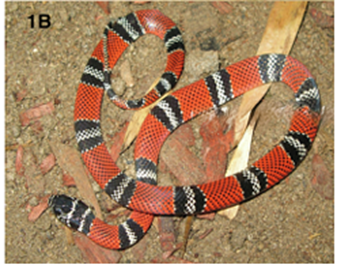
Both snakes can coexist in Colombia and Panama. Handling these animals without accurate species identification can lead to accidents, so it is advisable not to interact with them based on their appearance alone.
If you would like to read the article on an envenomation by Erythrolamprus bizona, here is the URL: https://www.sciencedirect.com/science/article/abs/pii/S0735675724004583